

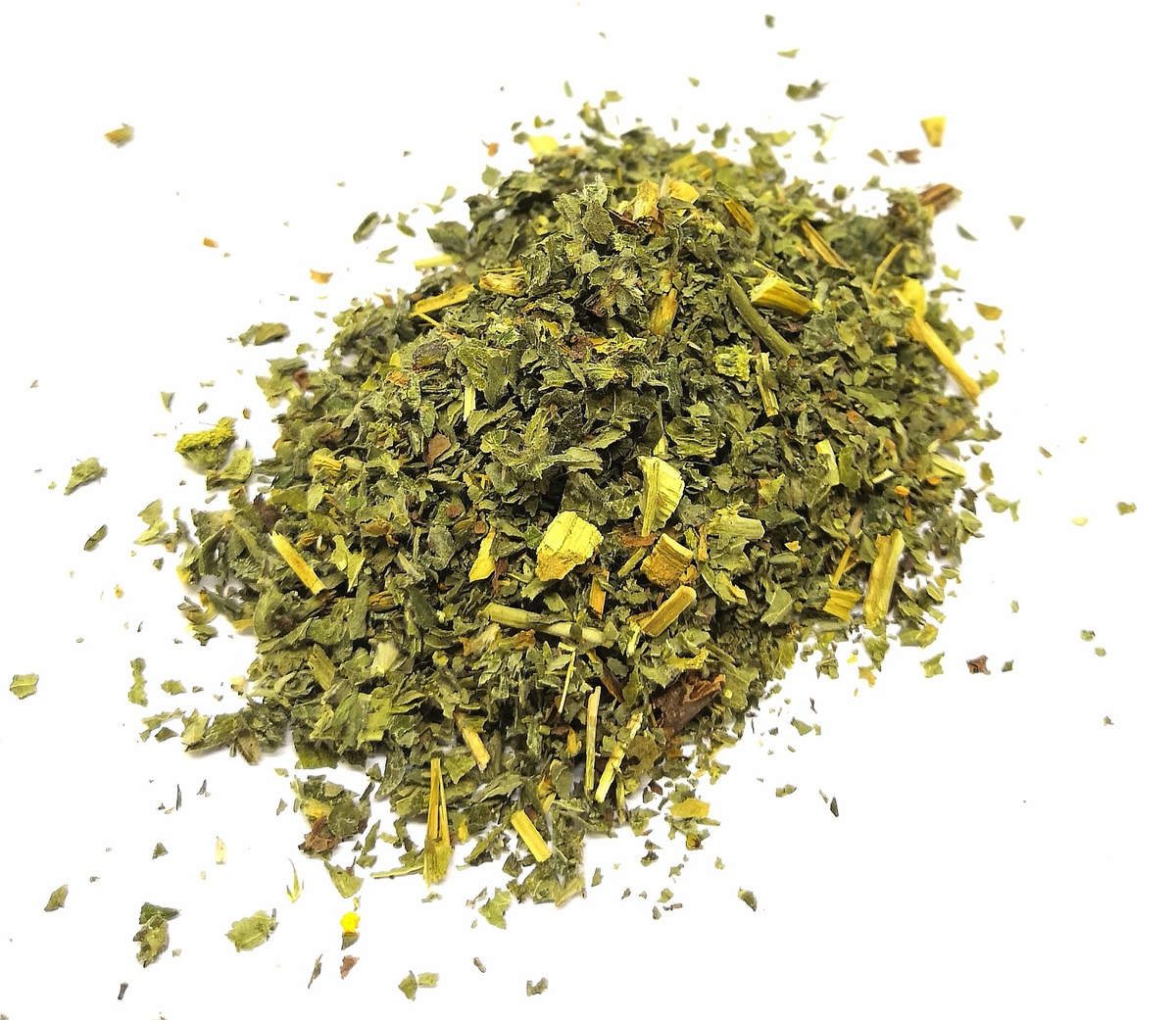




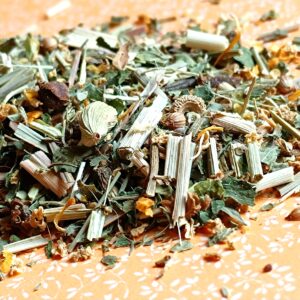
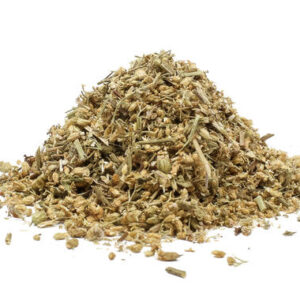
Herbal tea 50g
€3,60 s DPH
-
Harvesting, uses and effects of the medicinal plant common agrimony (Agrimonia eupatoria )
Common agrimony is one of the best-known medicinal herbs, partly thanks to its unmistakable appearance, but above all for its effects on the body. There are more than 12 known species of agrimony, found throughout Europe, Asia and North America. In Europe, the best-known species is common agrimony (Agrimonia eupatoria), which has been used for medicinal purposes since ancient times.
In ancient Greece, it was used as a remedy for eye diseases, which is also where its name comes from (agrimonia – a plant that heals the eyes), while in other parts of the world agrimony was used to treat wounds and scars, skin problems, coughs and sore throats, menstrual problems and diarrhoea. Agrimony has also been used as a natural yellow dye since time immemorial.
This hardy perennial can be found at woodland edges and in meadows, where it thrives in sunny to partially shaded locations with relatively dry, alkaline soil. It usually grows to a height of 0.5 to 1 m, and its long stems with yellow flowers make it difficult to mistake for another plant. Common agrimony flowers from June to August.
Scientific name: Agrimonia eupatoria
Classification: belongs to the rose family
Other names: agrimony, church steeples, sticklewort, God’s whip, cocklebur
Harvesting common agrimony

Harvest the flowers, stems and leaves in sunny weather when agrimony is in full bloom (June – August). Do not harvest stems thicker than 0.5 cm or the lower parts of the plant, so that it can regrow. Dry common agrimony at 35 °C in a well-ventilated, dark room or in a dehydrator. Proper harvesting and drying preserve agrimony’s mildly aromatic scent and characteristic slightly bitter taste.
Common agrimony contains the following active substances:
Essential oils, flavonoids, apigenin, luteolin, catechin, quercetin, kaempferol, tiliroside, triterpene glycosides, acids (palmitic, silicic, ursolic, tormentic and euscaphic), phenolic acids, tannins (5% – 20%), vitamin B1 (thiamine), vitamin K and minerals
Common agrimony and its effects
• Medicinal effects of common agrimony: anti-inflammatory, diuretic, analgesic, antihaemorrhagic, astringent, stops bleeding, detoxifying, antiseptic
• Thanks to its diuretic properties, agrimony helps the kidneys cleanse the blood and detoxify the body by eliminating accumulated toxins.
• Common agrimony also contains tannins, which help with digestion and diarrhoea, as well as coughs, sore throats and inflammatory conditions of the mucous membranes, stomach and intestines.
• Agrimony is also often applied externally as an oil or tincture for irritated skin, acne and various forms of eczema, without side effects.
• The essential oils in agrimony tighten tissue, helping to stop bleeding and speed up the healing process. Common agrimony has therefore been used since ancient times to accelerate the healing of various cuts and grazes. These effects of agrimony also help women reduce menstrual bleeding and prevent urinary tract infections.
As a tea, agrimony is taken to detoxify the body, relieve diarrhoea, sore throats and coughs, and reduce menstrual bleeding. External use as a decoction, tincture, oil or ointment is suitable for skin problems (rashes, eczema, acne) and for accelerating the healing of wounds and scars.
2 in stock
Harvesting, uses and effects of the medicinal plant common agrimony (Agrimonia eupatoria )
Common agrimony is one of the best-known medicinal herbs, partly thanks to its unmistakable appearance, but above all for its effects on the body. There are more than 12 known species of agrimony, found throughout Europe, Asia and North America. In Europe, the best-known species is common agrimony (Agrimonia eupatoria), which has been used for medicinal purposes since ancient times.
In ancient Greece, it was used as a remedy for eye diseases, which is also where its name comes from (agrimonia – a plant that heals the eyes), while in other parts of the world agrimony was used to treat wounds and scars, skin problems, coughs and sore throats, menstrual problems and diarrhoea. Agrimony has also been used as a natural yellow dye since time immemorial.
This hardy perennial can be found at woodland edges and in meadows, where it thrives in sunny to partially shaded locations with relatively dry, alkaline soil. It usually grows to a height of 0.5 to 1 m, and its long stems with yellow flowers make it difficult to mistake for another plant. Common agrimony flowers from June to August.
Scientific name: Agrimonia eupatoria
Classification: belongs to the rose family
Other names: agrimony, church steeples, sticklewort, God’s whip, cocklebur
Harvesting common agrimony
Harvest the flowers, stems and leaves in sunny weather when agrimony is in full bloom (June – August). Do not harvest stems thicker than 0.5 cm or the lower parts of the plant, so that it can regrow. Dry common agrimony at 35 °C in a well-ventilated, dark room or in a dehydrator. Proper harvesting and drying preserve agrimony’s mildly aromatic scent and characteristic slightly bitter taste.
Common agrimony contains the following active substances:
Essential oils, flavonoids, apigenin, luteolin, catechin, quercetin, kaempferol, tiliroside, triterpene glycosides, acids (palmitic, silicic, ursolic, tormentic and euscaphic), phenolic acids, tannins (5% – 20%), vitamin B1 (thiamine), vitamin K and minerals
Common agrimony and its effects
• Medicinal effects of common agrimony: anti-inflammatory, diuretic, analgesic, antihaemorrhagic, astringent, stops bleeding, detoxifying, antiseptic
• Thanks to its diuretic properties, agrimony helps the kidneys cleanse the blood and detoxify the body by eliminating accumulated toxins.
• Common agrimony also contains tannins, which help with digestion and diarrhoea, as well as coughs, sore throats and inflammatory conditions of the mucous membranes, stomach and intestines.
• Agrimony is also often applied externally as an oil or tincture for irritated skin, acne and various forms of eczema, without side effects.
• The essential oils in agrimony tighten tissue, helping to stop bleeding and speed up the healing process. Common agrimony has therefore been used since ancient times to accelerate the healing of various cuts and grazes. These effects of agrimony also help women reduce menstrual bleeding and prevent urinary tract infections.
As a tea, agrimony is taken to detoxify the body, relieve diarrhoea, sore throats and coughs, and reduce menstrual bleeding. External use as a decoction, tincture, oil or ointment is suitable for skin problems (rashes, eczema, acne) and for accelerating the healing of wounds and scars.






 Natural andarky
 Polished Andaras


 JAIN´S Aroma Oils


 Rosaries
 VIJAYSHREE Golden Nag Champa candles







Reviews
There are no reviews yet.